
A Dinner-for-Four Table That Leaves Room for Dinner
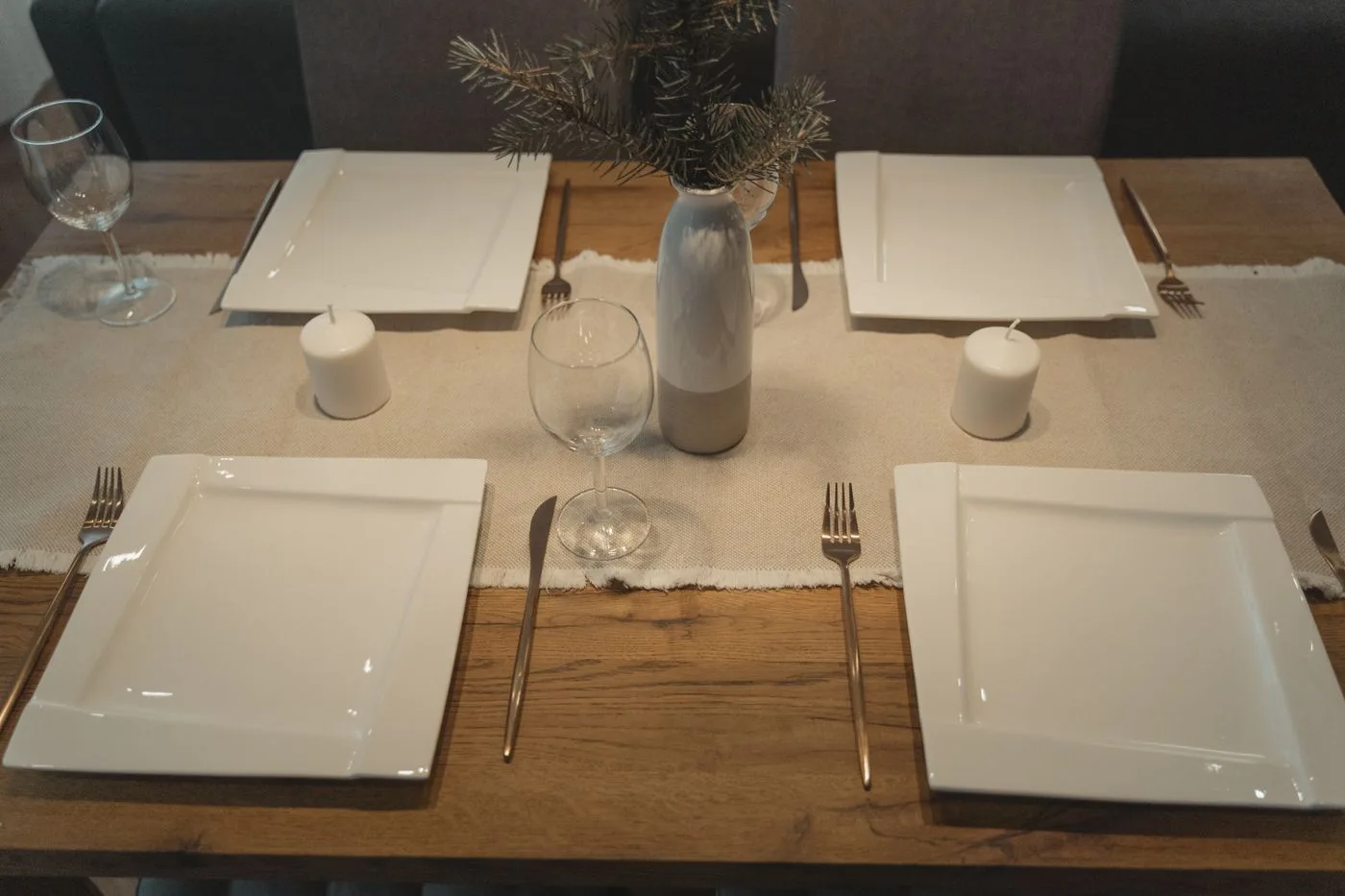
A welcoming dinner table gives people somewhere to put their glass, space to pass a bowl, and a clear view of one another. Those needs can disappear beneath a beautiful centerpiece. For four people at home, begin with the food and the seats, then add just enough detail to make the evening feel considered.
This is a plan for a relaxed meal rather than a formal event. It assumes a shared main dish, a side, and something simple afterward. Adapt the setting to the menu and your guests’ needs. There is no advantage in adding utensils nobody will use or buying a complete new dinner service for a single evening.
Rehearse the table with empty dishes
Put four place settings on the table, then add the serving bowls you plan to use. Include water, any other drinks, and the space needed for hot dishes with appropriate protection for the table surface. Pull the chairs out and sit in each position. You will quickly see whether the center is overcrowded.
If everything feels tight, move serving dishes to a nearby surface and pass them from there. That can be more comfortable than arranging a dense display in the middle. Check the route between kitchen and table before guests arrive, especially if furniture has been moved. The rehearsal should solve practical bottlenecks while there is still time to simplify.
Start with the dishes you own
Four plates do not need to come from one collection. Similar scale and a shared color can bring mixed pieces together. The important thing is that the plates suit the meal and leave room at each setting. A very large dinner plate can overwhelm a compact table even if it looks impressive on its own.
Check for enough usable glasses and utensils before shopping. Borrowing a small number of pieces can be more sensible than buying an entire set. If you do need new dishes, consider storage and everyday use after the dinner. Read care information, handle the pieces when possible, and check how they stack. A plate that is awkward to wash or store will remain awkward after the occasion has passed.
Let the menu determine the setting
Place only the utensils needed for the courses you are serving. A simple meal may need a fork, knife, spoon if relevant, and one drinking glass to begin. Add other pieces when they become useful rather than treating the table as a formal exercise. Guests should be able to recognize what is for them without navigating an obstacle course.
Ask about dietary requirements in advance and make a practical plan for serving. Keep separate utensils where necessary for the meal and the guests’ needs. Do not rely on a decorative label alone to solve an allergy concern; discuss what is required directly. Knowing these details early is more hospitable than discovering them while everyone is seated.
Use textiles for both feel and cleanup
A tablecloth changes the mood and can unify mixed dishes, but it should fit the table and the way you serve. Check that the drop does not catch on chairs or pool where someone will step. A runner leaves more of the table visible and is easier to remove, though it offers less coverage.
Cloth napkins can feel pleasant without elaborate folding. A plain fold beside the plate is enough. Read washing instructions before buying and think about whether ironing is something you want to do regularly. Existing clean napkins or practical paper napkins are valid choices. The purpose is comfortable use, not creating a maintenance routine you dislike in exchange for one attractive evening.
Keep the centerpiece low and limited
A small vase or a short line of simple objects can make the table feel finished. Sit down and check whether everyone can see across it. Leave room to place serving dishes rather than assuming guests will pass plates around a tall arrangement. Strongly scented flowers can also compete with food, so consider the setting rather than just the color.
If you use candles, follow the product’s safety instructions and keep flame away from fabrics, foliage, and reaching arms. Do not leave burning candles unattended. Suitable flameless options may be a better choice in some households. You can also skip candles entirely and create atmosphere with the room’s existing lighting. A welcoming table does not depend on a particular decorative object.
Spend where a recurring need exists
The most useful purchase might be a serving bowl that handles both dinner and everyday meals, or a jug that fits comfortably in the cupboard. Before buying, write down its intended contents and measure the storage space. A large platter is less helpful if it cannot fit on the table beside four plates.
Compare handle comfort, weight when full, care requirements, and suitability for the intended use. Do not assume a beautiful ceramic dish is oven-safe without the manufacturer’s confirmation. Choose a piece you can use again instead of buying several inexpensive objects only to fill a decorative theme. Reusing a coherent group over time can give your table more character than a complete set chosen in a hurry.
Prepare the easy parts ahead
Set out clean dishes, fill a water jug when appropriate, and choose where dirty plates will go after each course. Put dessert utensils nearby if you need them later. Keep a little clear space in the kitchen for returning dishes so the end of dinner does not become a balancing act.
Then let the table do its job. People should be able to settle in, pass the food, and stay for a conversation without repeatedly moving decorations. For another everyday setting that benefits from a practical edit, see the ideas in our everyday living archive. The most memorable part of dinner is usually the time spent together, and a thoughtful table makes that easier.