
Choose an Everyday Bag by What You Actually Carry
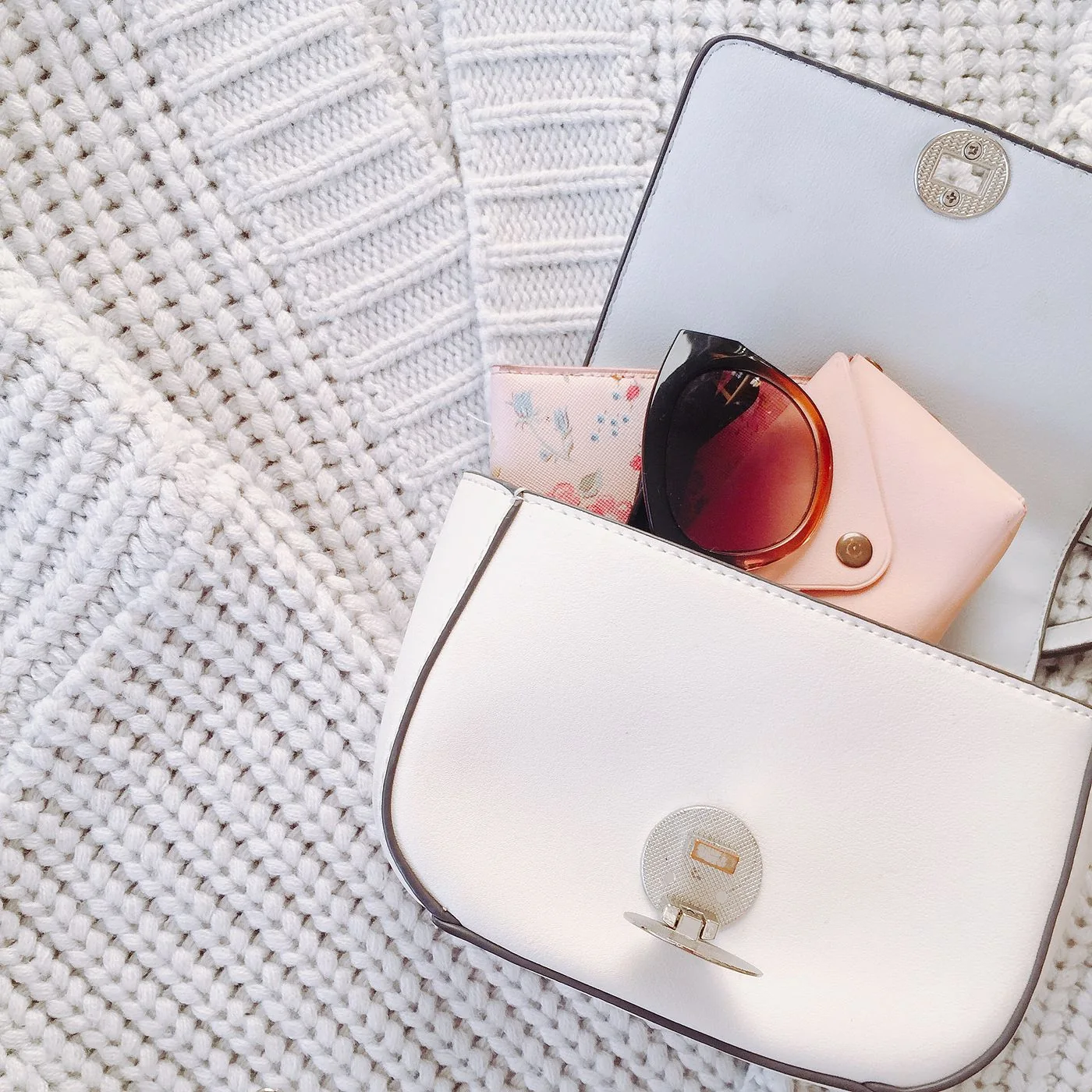
A bag often enters the wardrobe as a color decision and leaves the house as a logistics problem. The opening is too narrow for your glasses case, the strap slides off your coat, or the generous interior becomes a place where keys disappear. Before comparing shapes, empty your current bag onto a table. Separate the things you use daily from the things you carry because there happens to be room.
This small inventory is more informative than a product photograph with an artfully arranged phone and lipstick. Your essentials may include medication, a water bottle, reading glasses, a notebook, or equipment for work. There is no ideal universal bag size. The useful size is the one that carries your real contents comfortably on the route you actually take.
Make two contents lists
Write one list for an ordinary day and another for the busiest recurring day. Be specific about dimensions, especially for a tablet, laptop, or rigid case. Measure the object itself and compare it with the bag’s internal dimensions when available. External measurements do not establish usable space because seams, padding, and compartments occupy part of the interior.
Decide whether the busiest day justifies a larger everyday bag. If it occurs once a month, a smaller bag plus an occasional tote may be easier. If you commute with equipment every weekday, buying a tiny bag and carrying three extras makes little sense. Aim for a system with a clear role for each piece rather than a promise that one accessory can cover every possible plan.
Test the opening before the capacity
A roomy base is not helpful if the opening prevents you from reaching it. In a store, ask to try a clean object similar in size to your largest essential, or compare measurements carefully online. Check the opening with the bag worn, not only resting on a counter. Can you reach a payment card while the strap remains on your shoulder? Can you close it again without rearranging everything?
Consider the closure in the places you visit. A zip, flap, magnetic fastener, or open top each offers different convenience, but none makes a bag theft-proof or waterproof. Choose according to your preferences and the maker’s actual descriptions. If you need protection for electronics, use equipment intended for that purpose and avoid treating decorative hardware as a security specification.
Judge the strap over your coat
Try the bag with the outer layer you wear most often. Strap length that is comfortable over a T-shirt may become too short over a coat. Move your arms, bend, and walk a few steps. Check whether hardware presses against you and whether a shoulder strap stays in place. Crossbody straps should adjust to a position that feels natural, without the bag repeatedly hitting your arm or thigh.
The empty bag’s weight is worth noticing, especially if your daily contents are already substantial. Heavy decorative fittings can use part of the weight you are willing to carry. A wide strap may distribute pressure differently from a narrow one, but comfort remains individual. There is no substitute for testing the bag under conditions reasonably similar to your routine.
Decide how much organization helps
An interior full of small compartments can be useful if the compartments match your belongings. Otherwise, they reduce flexibility. Choose a dedicated spot for keys and cards, then consider whether a removable pouch would organize the rest more effectively. A contrasting lining may make contents easier to see, while a very dark interior can make small objects less obvious in dim light.
If you change bags frequently, a pouch for essentials can simplify the move. Test whether it fits through the opening without force. Do not buy several organizers before using the bag; they can consume the room you were trying to gain. Begin with the minimum structure and add only what solves a repeated problem.
Match material and care to the job
Inspect the label and written care guidance rather than identifying material by appearance. Leather-looking surfaces may have different compositions and cleaning requirements. Consider exposure to rain, contact with light clothing, and where you set the bag during the day. A pale bag that needs delicate handling may suit occasional dinners while being inconvenient on a crowded commute.
Check stitching, strap attachments, lining, and the operation of the fastening. Visible defects deserve a replacement or a clear decision, even if the bag is discounted. If repairability matters, ask what the brand or a local repair specialist can actually provide. Avoid assuming a premium label guarantees lifetime service; verify the current terms before treating that as part of the value.
Choose the color after the function
Put photographs of your usual outfits beside the bag options. A brown bag can be a useful connector among cream, navy, and olive; a bright color can become the main accent. You do not have to match shoes and bag. Our neutral color and texture guide explores how different surfaces can make a simple outfit feel considered.
Before paying, review the return conditions, especially for discounted, personalized, or secondhand items. Take the bag home only if its capacity, opening, strap, and care requirements all work for you. A good everyday bag should reduce small frustrations. When you can retrieve your keys without stopping the conversation and carry what you need without constant adjustment, the shape and color become pleasures rather than compensations.